
Kaufman County Court Records After a Jail Arrest
After an arrest in Kaufman County, the first public trail may be a jail booking at the Kaufman County Detention Center. That booking record is not the same thing as a criminal case. Texas procedure requires an Article 15.17 magistrate warning after arrest, and the case then moves toward prosecutorial review. In Kaufman County, the Kaufman County Criminal District Attorney's Office, led by Criminal District Attorney Erleigh Norville Wiley, decides whether charges are filed, amended, declined, enhanced, or presented to a grand jury.
The jail side and the court side answer different questions. Jail inmate records show current custody information from the sheriff's roster, such as name, age, race, sex, admit date, and hidden roster columns for arresting agency or primary charge. Jail mugshots and booking photos are requested through sheriff open-records channels when they are not publicly posted. Court records after a jail arrest are the filed case records: charge documents, court type, case status, settings, bonds, warrants, dismissals, pleas, verdicts, and post-case orders.
How to Find Kaufman County Court Records After an Arrest
The main court-record access channel is the Kaufman County online court-record portal. Research confirmed the official portal entry point, although the shell-accessible inspection could not capture every search field. For misdemeanor criminal search and copy requests, the Kaufman County Clerk searches and copies page gives a separate clerk channel. Felony cases are usually district-court records, while misdemeanor cases may be handled through county-court channels. A jail charge can therefore move into different court offices depending on how the prosecutor files it.
- Start with the Kaufman court portal and search by defendant name or case number when known.
- Compare the name and admit date against the sheriff's roster if the person is still in county custody.
- Open the matching case and review the charge description, court type, filing date, party names, and current status.
- Use the County Clerk search/copy process for misdemeanor criminal searches when portal results are incomplete or certified copies are needed.
- For felony case questions, use the court portal and district-court clerk channels rather than relying only on the jail charge grid.
The County Clerk page says public inspection is available at no charge except for mental health and juvenile records. Misdemeanor criminal search requests must include the name of the person charged, a date of offense or conviction within a 10-year period, and the type of offense if known. Plain copies are listed at $1 per page, certified copies at $5 for certification plus $1 per page, and certification of facts at $5 for search results without copies. Mailed requests go to Court Department, Kaufman County Clerk, 1902 US HWY 175, Kaufman, TX 75142, with applicable fees and a return address.
Sheriff open-records requests are for jail, booking, incident, and law-enforcement records. They are not a substitute for the court clerk's case file, but they can help when the question is about the booking event, the arresting agency, a booking photo, or a record not visible in the public roster grid.
The official Kaufman court portal is the local entry point for filed cases.
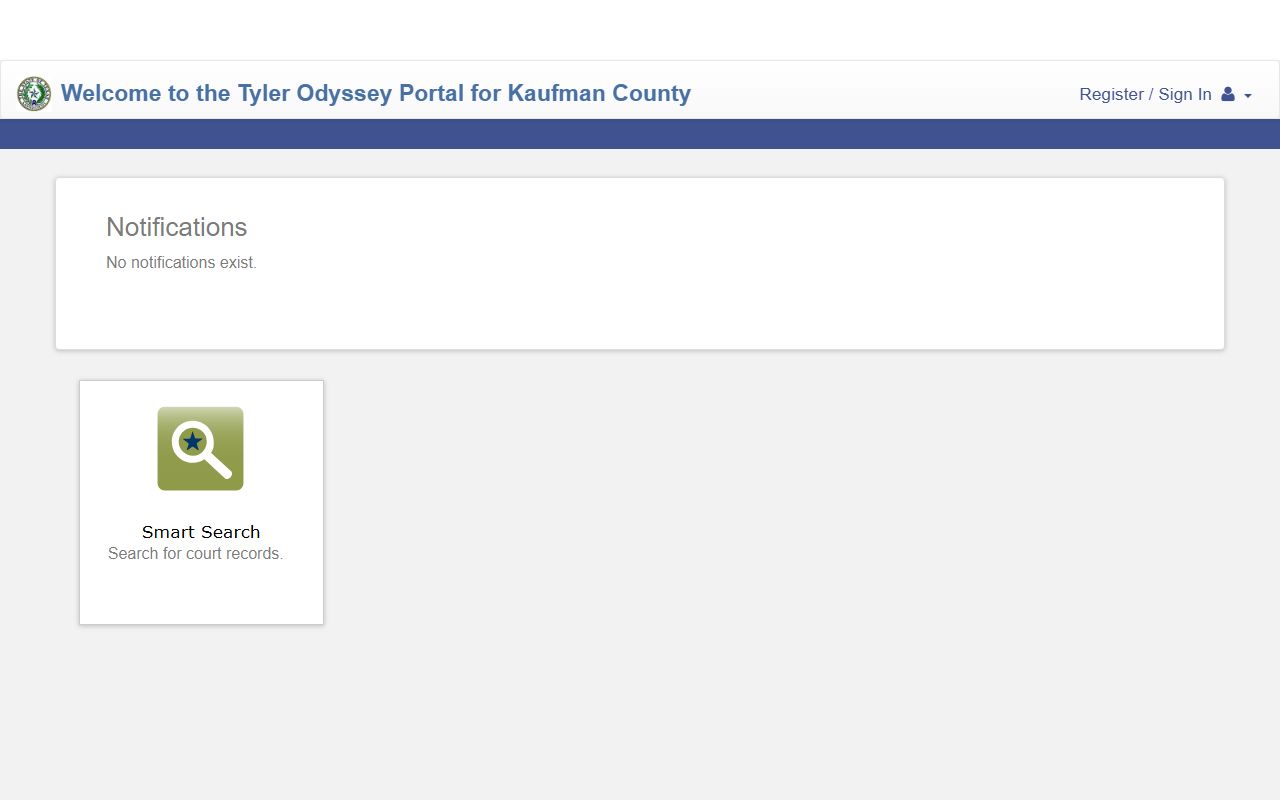
Use the portal for case tracking, then use the clerk copy channel when a certified or mailed record is needed.
How Charges Get Filed After an Arrest: Complaint, Information, and Indictment
A booking charge is an early custody label. The filed court charge begins when the state uses a charging document. The DA's intake, felony, misdemeanor, discovery, and appellate divisions are listed on the county DA page, and those functions matter because the prosecutor may proceed differently depending on the offense, evidence, victim input, criminal history, and whether grand-jury review is required.
| Charging Document | Who Uses It | Common Use | What to Check |
|---|---|---|---|
| Complaint | Officer, magistrate, or prosecutor process | Early accusation or probable-cause document after arrest | Look for the alleged offense, date, complainant, and court receiving the case. |
| Information | Prosecutor | Many misdemeanor prosecutions and some felony procedural paths where allowed | Confirm the exact filed offense because it may differ from the roster's primary charge. |
| Indictment | Grand jury | Felony cases requiring or using grand-jury charging | Check whether the indictment adds, removes, enhances, or narrows counts. |
| Amended charging document | Prosecutor or court-approved filing | Corrected, reduced, or changed charges as the case develops | Read the docket chronologically so an older charge is not mistaken for the active one. |
Charge Status in Court Records After a Kaufman County Arrest
Charges often change after booking. The Kaufman current-inmates grid may show a primary charge in a hidden column, and the charge grid may count current inmates by charge description, but those jail records are not final court dispositions. A prosecutor can accept the booking charge, reduce it, add a related charge, reject it, dismiss it later, or obtain an indictment with different wording. Always read the most recent docket entry and disposition, not just the first charge line.
| Status | What It Means | Why It Matters |
|---|---|---|
| Pending | The charge has been filed or is active, but no final disposition appears. | Bond, court dates, discovery, and warrant settings may still change. |
| Amended or reduced | The filed allegation changed after review, negotiation, or court order. | The roster charge may look more serious or less precise than the active court charge. |
| Dismissed | The state or court ended that charge without a conviction on that count. | A dismissal is not automatically an expunction; a separate legal process may be required. |
| No bill or rejected | A grand jury or prosecutor did not proceed on the presented allegation. | The arrest may still appear in some records until cleared through eligible procedures. |
| Convicted, acquitted, or deferred | The case reached a formal outcome through plea, verdict, dismissal after deferral, or acquittal. | Background-check meaning depends on the exact disposition, not the arrest alone. |
Bond, Holds, and Release After an Arrest
Texas Code of Criminal Procedure Article 17.15 governs bail factors, including reasonable assurance of appearance, the nature of the offense, and the rule that bail should not be used as an instrument of oppression. Article 15.17 connects the arrest to the magistrate warning and initial bail decision. In Kaufman County, a person may have a bond on one charge but still remain in custody because of another hold, warrant, detainer, or no-bond order.
| Bond or Hold Type | How It Works |
|---|---|
| Cash Bond | The full amount is paid through the authorized court or jail process after confirming custody, charge, and payment rules. |
| Surety Bond | A licensed bail-bond company posts the undertaking. The sheriff-linked approved list dated June 1, 2026 says only listed companies are approved and licensed to write Kaufman County bonds as of that date. |
| Personal or PR Bond | Release is based on a signed promise and conditions rather than full cash payment, when the court authorizes it. |
| No-bond or court hold | Release is blocked unless a judge changes the order or the hold is resolved. |
| Other-agency, parole, ICE, or federal hold | A new Kaufman bond may not release the person if a federal/USMS hold, TDCJ/parole warrant, ICE detainer, or outside-county warrant remains. |
The researched workflow is to verify the person on the official roster or by calling the jail at 972-932-4337, confirm the active charges and holds, then use a current approved bond company or the proper court/jail payment channel. Official research did not locate a complete public table for accepted bond payment methods, counter hours, or a 24-hour bond window, so those details should be confirmed before traveling to the facility.
Warrants That Lead to Court Records After an Arrest
No official Kaufman County Sheriff's public active-warrant search or warrant list was located in the research. The reliable local channels are the sheriff's contact and open-records processes, the court portal, the County Clerk and District Clerk court channels, and the relevant Justice of the Peace or municipal court for lower-court warrants. The county Justice of the Peace pages state that JPs may issue search and arrest warrants, conduct preliminary hearings, and perform magistrate functions.
Different warrants have different records. An arrest warrant authorizes arrest on an alleged offense. A bench warrant or capias usually follows failure to appear or noncompliance in a court case. A search warrant concerns a place or property, not an inmate record. A fugitive warrant or other-agency hold can keep someone in the Kaufman County Detention Center while the underlying case belongs elsewhere. TCJS population categories for Kaufman include bench warrants and parole violators or blue warrants, and the roster charge grid includes failure-to-appear type entries, so warrant-related custody is a real local category.
Charges vs. Convictions in Court Records After an Arrest
An arrest and a charge are accusations, not proof of guilt. A conviction is a final court result after a plea, verdict, or other adjudication that creates a conviction record. Kaufman County court records should be read by stage: booking, prosecutor filing, pending case, amended charge, dismissal, deferred disposition, plea, verdict, and sentence. Statewide post-conviction criminal-history needs may require DPS criminal-history channels, not only a county portal search.
| Charge | Conviction | |
|---|---|---|
| Stage | Allegation after arrest or formal filing by the state | Final outcome after plea, verdict, or qualifying adjudication |
| Proof level | Based on accusation, probable cause, filing review, or grand-jury action | Requires the legal standard for conviction or a voluntary plea |
| Where it appears | Jail roster, charge grid, complaint, information, indictment, or docket | Judgment, sentence, disposition, criminal-history record, or TDCJ record if imprisonment follows |
| Can it change? | Yes. It may be amended, reduced, dismissed, or replaced. | It can be appealed, set aside, sealed, or expunged only through specific legal routes. |
Sealed vs. Expunged Arrest Records
Texas law distinguishes sealing-type relief from expunction. Research identified Texas Code of Criminal Procedure Article 55.01 as the expunction eligibility statute for certain arrests and outcomes. Expunction is a court process; it is not automatic because a charge was dismissed, rejected, or never filed. Sealing and nondisclosure can limit public visibility in some situations, but they do not mean every agency record is destroyed.
| Sealed or Nondisclosed | Expunged | |
|---|---|---|
| Public visibility | Generally hidden from ordinary public access if the order applies. | Treated as removed under the expunction order for eligible records. |
| Government access | Some agencies or justice users may retain limited access depending on the order and law. | Access is much more restricted, subject to the scope of the expunction order. |
| Eligibility | Depends on disposition, offense, waiting periods, and Texas nondisclosure rules. | Depends on Article 55.01 and related Texas expunction requirements. |
| Practical step | Review the court disposition and consult a qualified Texas attorney or legal-aid channel. | File in the proper court if eligible; do not assume the sheriff, clerk, or a private website will remove records without an order. |
Background Check Considerations
Casual court-record lookups are not the same as regulated employment, tenant, insurance, credit, or licensing background checks. A record found in the portal or roster may be incomplete, out of date, or limited to one agency. For any consequential decision, use legally compliant background-check procedures and verify the final court disposition with the originating clerk or agency.
Important: This site is not a consumer reporting agency and must not be used for any FCRA-regulated screening purpose.
Restricted Court Records After an Arrest in Kaufman County
Texas Public Information Act access favors public information, but it does not make every arrest, jail, or court document publicly available online. Government Code Section 552.108 can affect law-enforcement and prosecutorial information in active or sensitive matters. Juvenile and mental-health records are restricted; the County Clerk page specifically excludes mental health and juvenile records from ordinary public inspection. Sheriff open-records requests may produce redacted records within 10 working days if the requester accepts redactions, while unredacted or disputed records can require an Attorney General ruling process that may take up to 45 working days.
Victims, witnesses, and family members who need custody-change notice can also use Texas VINELink. VINELink is a custody notification tool, not a court docket, but it is useful when a release, transfer, or custody-status change matters more than a certified court copy.
The County Clerk searches and copies page documents public inspection, misdemeanor-search requirements, and copy fees.
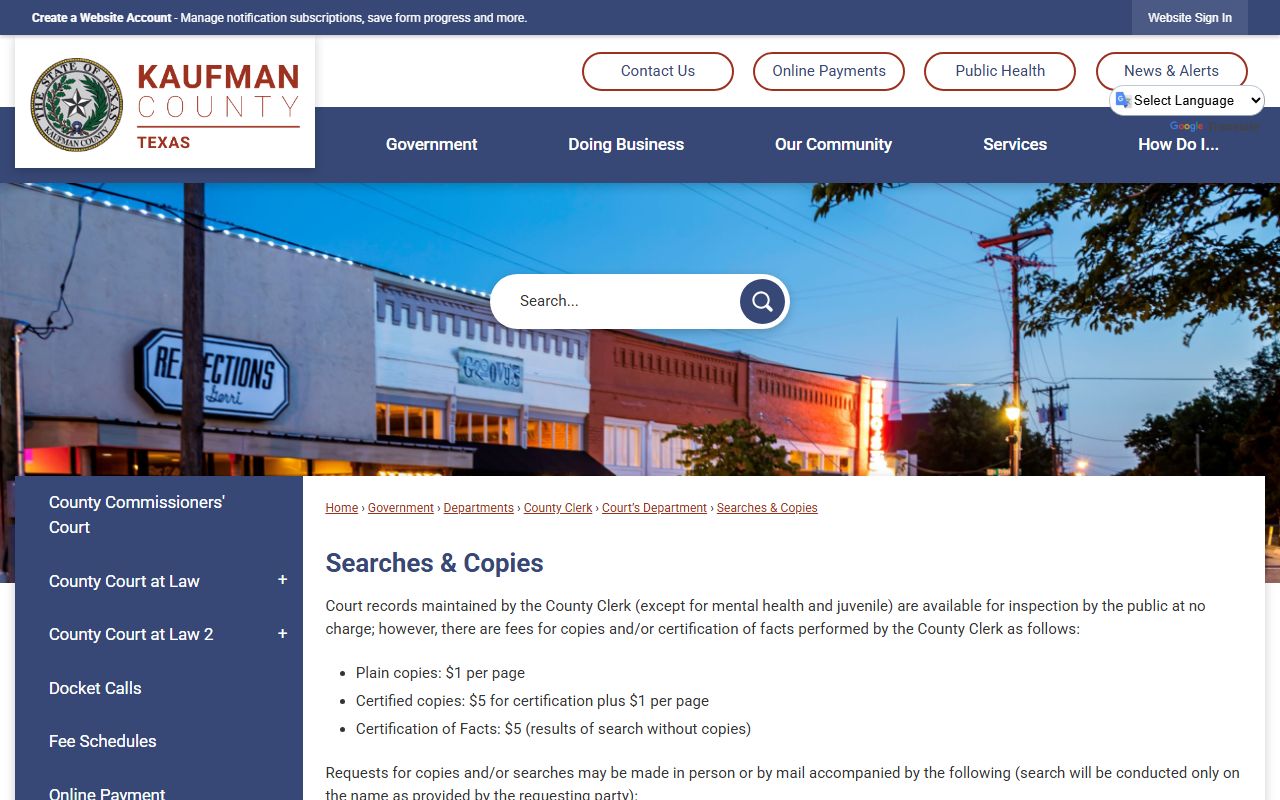
For court records after a jail arrest, the clerk channel is the practical fallback when the portal does not provide enough detail or a certified copy is required.